Paid by the fraction. A builder series for AI agents and the creators they serve, moving value too small to have been worth moving before: per article, per listen, per call, per second. Settled instantly on Arc in USDC.
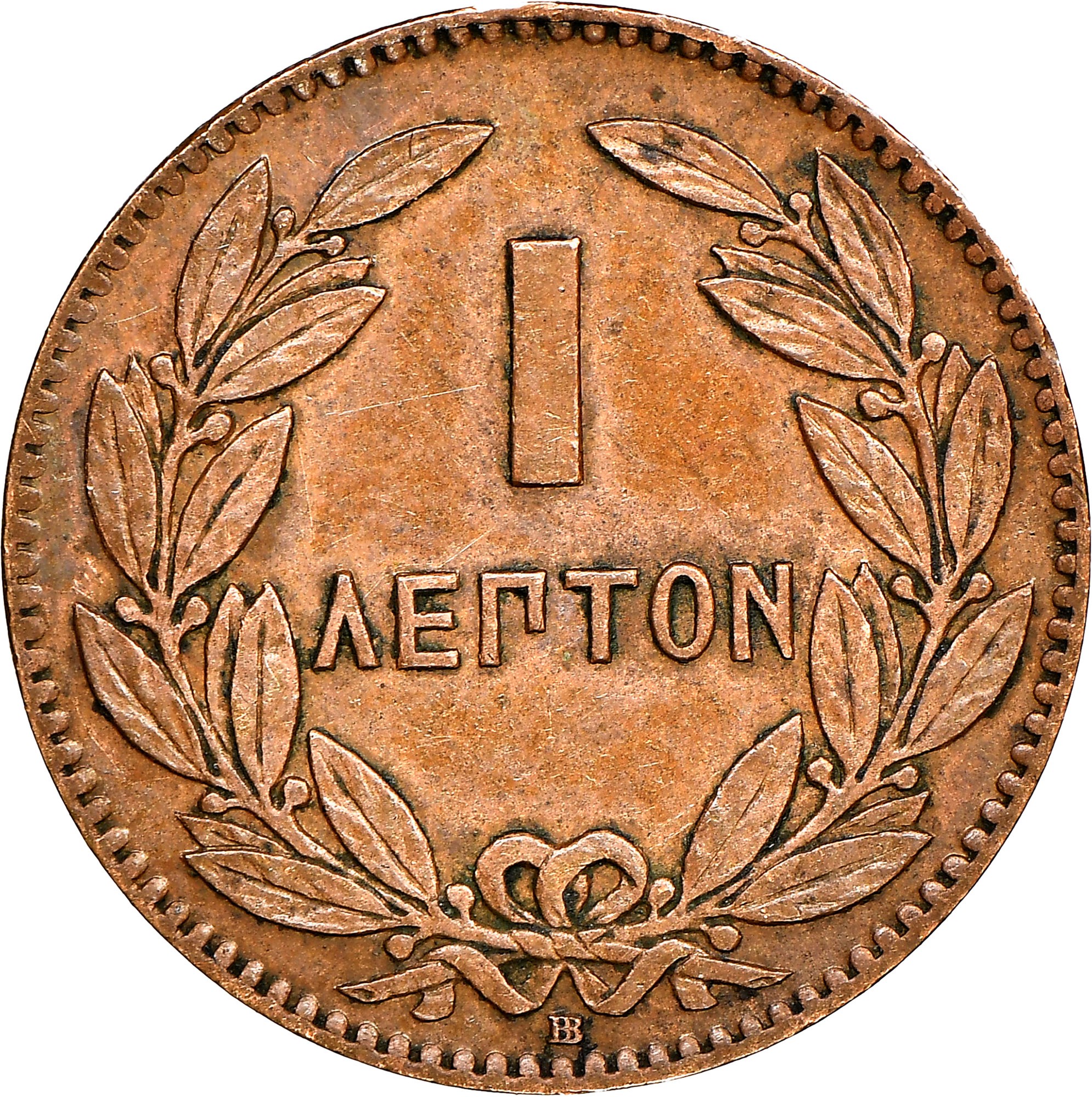
The lepton was the smallest coin of the Greek world, struck so thin that anyone could pay at the very edge of worth. Nanopayments are the lepton reborn for machines: value as small as $0.000001, clearing in under half a second.
The Lepton Agents Hackathon is hosted by Canteen — a builder series for AI agents and creators that pay, receive, and stream value at the smallest scale, settled on Arc, the stablecoin-native L1 from Circle.
A research and technology firm working at the intersection of crypto, AI, and payments. Hosts and curates the Lepton Agents Hackathon.
A global financial technology firm building the most widely used stablecoin network. Issuer of USDC and EURC.
The purpose-built L1 blockchain from Circle, where capital, humans, and machines coordinate. Native USDC gas and sub-second finality make sub-cent payments economical for the first time.
uv tool install git+https://github.com/the-canteen-dev/ARC-cli
Subscriptions were always a workaround for a missing primitive. For as long as a payment couldn't be smaller than roughly thirty cents after fees, there was no way to sell a five-cent article or a one-cent play. The only move was to bundle a month of them and charge ten dollars. Every subscription is a quiet admission that the real unit was too small to sell on its own.
Nanopayments remove the floor. Value as small as $0.000001, gas paid in USDC rather than a volatile token, settled in under half a second on Arc with gasless batching. The smallest unit becomes sellable for the first time. That is why this round leans toward creators and publishers: they are the ones the floor priced out, and they already have the audiences.
And it is not only people. AI agents can now pay each other per call, per byte, per second, which turns "what should this cost?" into a decision an agent makes thousands of times an hour. Treat the sub-cent payment as a primitive, treat your agent as something that earns and spends, and the products start to suggest themselves.
10–12 teams demonstrating exceptional work, awarded in roughly equal shares (~$650–$750 per team). Not ranked within the cohort.
For developers who provide the most useful product feedback on Circle's developer tooling — friction points, product improvements, and developer-experience insights.
Code-golf challenges, Discord puzzles, content challenges, and assorted side quests scattered throughout. Designed for explorers.
Struck so ordinary people could transact at the edge of worth: the denomination of bread, water, and the day's wage. Mints kept shrinking the coin until it was too small to be worth striking. Software has no such floor, so the lepton becomes the nanopayment.
In daily life these were the coins that mattered: a few obols covered a day's bread in Athens, and a Roman entered the public baths for a single quadrans. Not every economy minted them. Egypt weighed value instead (the deben and its tenth, the kite), and China and India used cowrie shells for the smallest change.
Circle's developer platform on Arc — the primitives best suited to agents and creators that move money at the smallest scale. Use what you need.
Open-source starting points — fork them, remix them, or use as scaffolding for your submission. Full index →
RFBs — Requests for Builders — are our version of YC's Requests for Startups. Six open problems worth solving when the smallest payment finally clears. This round leans toward RFB 6 — Creator & Publisher Monetization, the people the payment floor priced out. But these aren't tracks. Build what you care about, or surprise us.
The problem. Your agent needs paywalled APIs, premium data, or compute. How does it autonomously discover, evaluate, and pay for these services without overspending?
The problem. Your agent provides a valuable service — analysis, generation, transformation. How do you monetize it per use, without the overhead of subscriptions?
The problem. Agents need to pay other agents for specialized services. How do we build fluid, real-time economic networks between them?
The problem. Some services aren't discrete, they're continuous. How do agents and viewers pay for ongoing compute, real-time data, or time-based services?
The problem. Building nanopayment-enabled agents is hard. What infrastructure and developer tools make it easy? Note: the facilitator and starter-kit lane is already crowded — aim at applications and orchestration.
The problem. Subscriptions don't fit all content. How do creators monetize individual pieces — one article, one photo, one song — without forcing readers into recurring fees? See the Prior Art section for eight worked angles.
"Money makes all things commensurable, since all things are measured by money."
"If you add a little to a little, and do this often, soon it becomes great."
"Men agreed to employ in their dealings something intrinsically useful and easily handled, such as iron, silver, and the like."
Old practices that nanopayments make buildable again. Each is the hack, with the historical callback in the line above it. Six on creators, one on streaming, one on agent networks.


The fastest-growing consumers of content are AI agents and aggregators, and they read the work as free substrate. The hack: give a piece a price for being used as a source, and have an x402 payment settle to the origin the moment an agent grounds an answer in it or another site republishes it. The payment is the easy part; the real build is an attribution layer that detects reuse and proves it, with DIYgod/RSSHub a natural host since it already sits between sources and the feeds that consume them. At Gateway's $0.000001 floor a single citation is worth settling.
Ties to RFB 6 · Creator & Publisher Monetization. The reporter who files a local story should earn from the thousand places it travels, not only the readers who land on the page.
The hack: a recurring micro-pledge that converts into a transferable claim on a creator's future tip and subscription flow, so backing someone early is a position that appreciates if they grow and can be sold on. It gives a small creator an upfront-capital path that monthly subscriptions never could, and opens a market that prices creators before the platforms notice them. Sub-cent fees are what make a claim worth a few dollars actually tradable rather than eaten by gas.
Ties to RFB 6 · Creator & Publisher Monetization. Recurring support is the floor; letting an early believer own a slice of what they helped build is the part subscriptions can't reach.
The hack: a quadratic-funding pool where a piece backed by a thousand people at $0.001 beats one backed by a single hundred-dollar donor, because breadth of support sets the match, not its size. The mechanism is proven (Gitcoin runs it for software) but has never reached content, because contributions that small couldn't clear on their own. Sub-cent settlement is the unlock; the build is the matching pool plus a sybil-resistance layer, dropped into a community like LemmyNet/lemmy or a mastodon/mastodon instance as the way it funds its best work.
Ties to RFB 6 · Creator & Publisher Monetization. Tipping sets how much one reader gives; this sets what the whole room chooses to keep alive.
The hack: splits that are recursive and automatic, following a lineage graph, so a remix of a remix pays every ancestor and an edited photo pays the original photographer, settled per play or per view. The enabler is that the lineage already exists as data: beetbox/beets and metabrainz/picard hold track credits and provenance, immich-app/immich holds photo origins. Read that graph, make it the payout rule, and attribution metadata becomes settlement logic. A six-way split of a $0.25 license is only worth doing when the fee is a fraction of a cent.
Ties to RFB 6 · Creator & Publisher Monetization. Collaboration stops being a payout someone reconciles by hand and becomes a property of the file itself.
Streaming platforms pool every subscription and pay out pro-rata, so your money mostly funds whoever is globally popular, not who you listened to. A self-hosted server like navidrome/navidrome or koel/koel already keeps your complete, honest play history. The hack: user-centric royalties on top of it, where your monthly amount is split only across the artists you played, by real listens, settled to them directly, with play-gating so a skip in the first seconds costs nothing. The majors have refused this model for years; direct sub-cent settlement makes it the easy default.
Ties to RFB 6 · Creator & Publisher Monetization. The most honest way to support an artist is to pay the ones you actually listen to.
The hack: continuous-authorization streaming for live media, where a viewer approves a spending rate instead of a price and a show on owncast/owncast or chocobozzz/peertube bills per second watched, revenue accruing in real time and splitting live across everyone on the stream. Leave at any second and you've paid for exactly the time you were present, while the creator watches it accrue and can surge the rate at peak. Reserved-but-unused time can auto-sell back to the pool, and a proof-of-flow check pauses the meter the instant delivery drops. Streaming payments are a real code gap in the x402 world, so even the base layer is open ground, and it only settles cleanly on sub-second finality with gasless batching.
Ties to RFB 4 · Streaming & Continuous Payments. The unit of a live performance is the second, so the unit of paying for it should be too.
The hack: retroactive funding for content. A sponsor pool pays out at the end of each period to the work that proved most valuable, with the split set quadratically by how many distinct people engaged rather than by how much any single backer gave. A crowd can agree on what was good far more easily than it can predict it, and the citation and play signals that already meter direct payments (items 01 and 05) become the impact record each round settles against. Sub-cent settlement is what lets one round distribute across a long tail of thousands of creators in a single sweep instead of handing out a few grand prizes.
Ties to RFB 6 · Creator & Publisher Monetization. The clearest signal of what deserved support is what people kept coming back to once it existed.
The hack: a broker agent that posts a USDC bond to stand behind a match, and if the provider it routed you to underdelivers, the bond slashes automatically the moment the outcome resolves. Reputation becomes capital at risk rather than a number you have to believe, which is far harder to fake, and the slash settles in under a second on Arc. This is the natural application of ERC-8004 (onchain agent identity and reputation), a lane the planning work flags as nearly empty next to the crowded facilitator space.
Ties to RFB 3 · Agent-to-Agent Nanopayment Networks. A broker worth using is one with something to lose when the introduction goes wrong.
We weigh agency and traction equally. Real users matter, real payments matter, and we want to see both. These weightings are recommendations — judges have the final say, and the best projects tend to break the rules.
There is no live demo day. Judging is asynchronous: submit through the project form, and the judges review on their own time after the deadline. You can submit as many times as you like, so submit early and often.
Plus a public GitHub repo, which is required. Judges read the repo directly and work hands-on with your live product where one is provided. Build for a reviewer who will click around without you in the room.
Two weeks, six RFBs, real payments settled on Arc in USDC. If you build for creators, this round is for you.